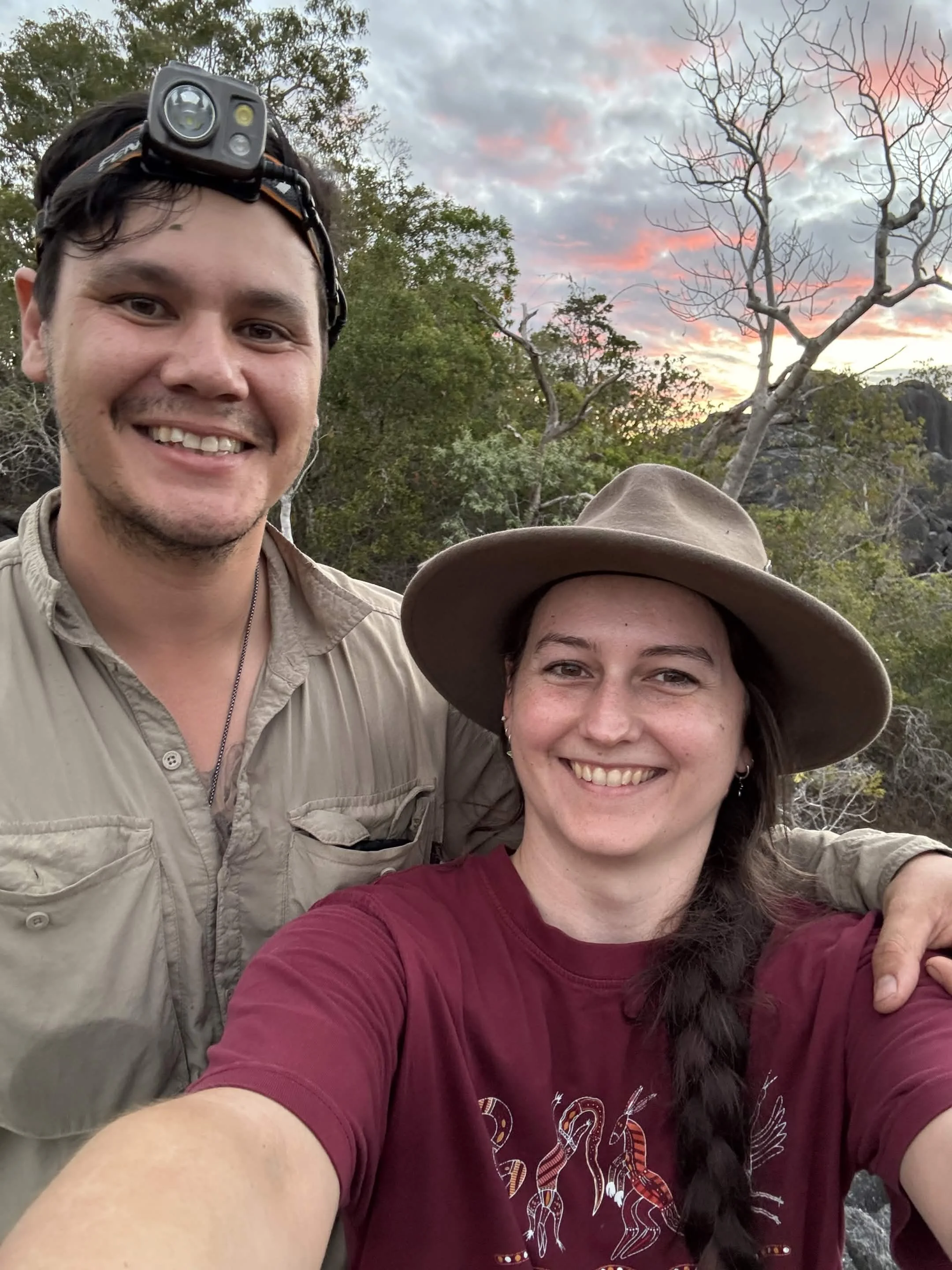
I've volunteered with the South Endeavour Trust (SET) for nearly a decade. SET is a sizeable NGO that flies under the radar. We have more than 20 conservation reserves across eastern Australia. As a result of our long relationship, Tim, the director, has given my fiancée Jasmine and me access to landscapes and threatened species most people never see.
In June 2026, SET won a grant for a two-year research project on the threatened cave bats of Cape York. So Jasmine, Nico, Liz, Jon, Michael, Jojo, Chris and I spent a week exploring hidden caves, isolated rock outcrops and the rugged hills of Kings Plains.
The project is, in some ways, relatively simple. It has four parts.
1. Starting small: The Pimple
We began with a trial run at a site called The Pimple. The plan was to catch as many Semon's leaf-nosed bats (Doryrhina semoni) as we could and fit them with small radio transmitters. We then split into three teams, each on a separate hilltop, and tracked the bats by radio to find out how they use the landscape. Are they following the creeks? Crossing the hills? Heading out into open country? Staying close to the roost, or moving between several?
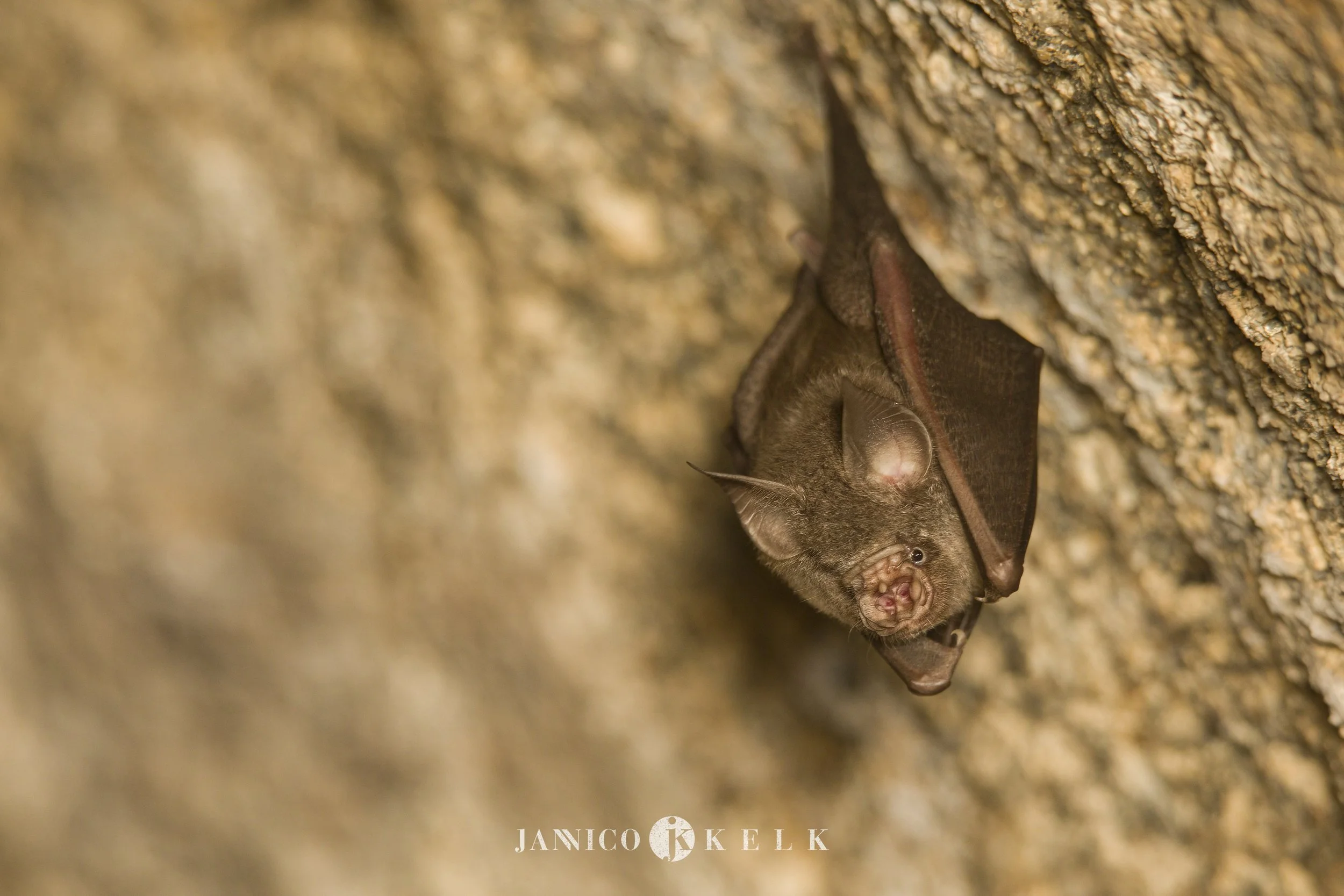
Semon's leaf-nosed bats (Doryrhina semoni)
The catch is scale. We can only track a handful of bats at a time, and the data — though good — are fairly coarse. Each team has to take a reading at the same moment, and in practice that never quite lines up. And unless you've radio-tracked animals before, it's worth knowing that you're really just estimating signal strength by ear. That leaves room for human error and differences in equipment. On top of that, you're limited by how many teams you can put in the field.
This first round of data shapes what comes next.
2. Mapping where the bats go
With that data, we can work out how far Semon's leaf-nosed bats and greater large-eared horseshoe bats (Rhinolophus robertsi) travel from their roost. That tells us where to place radio-tracking towers on hilltops. The towers remove almost all of the error and bias I mentioned: instead of relying on people to coordinate their movements, we can simply read a spreadsheet to pinpoint where the animals are. The other advantage is that the towers do the tracking, not us — so we can tag as many bats as we like. This stage involves three major field surveys: one during the breeding season and two outside it.
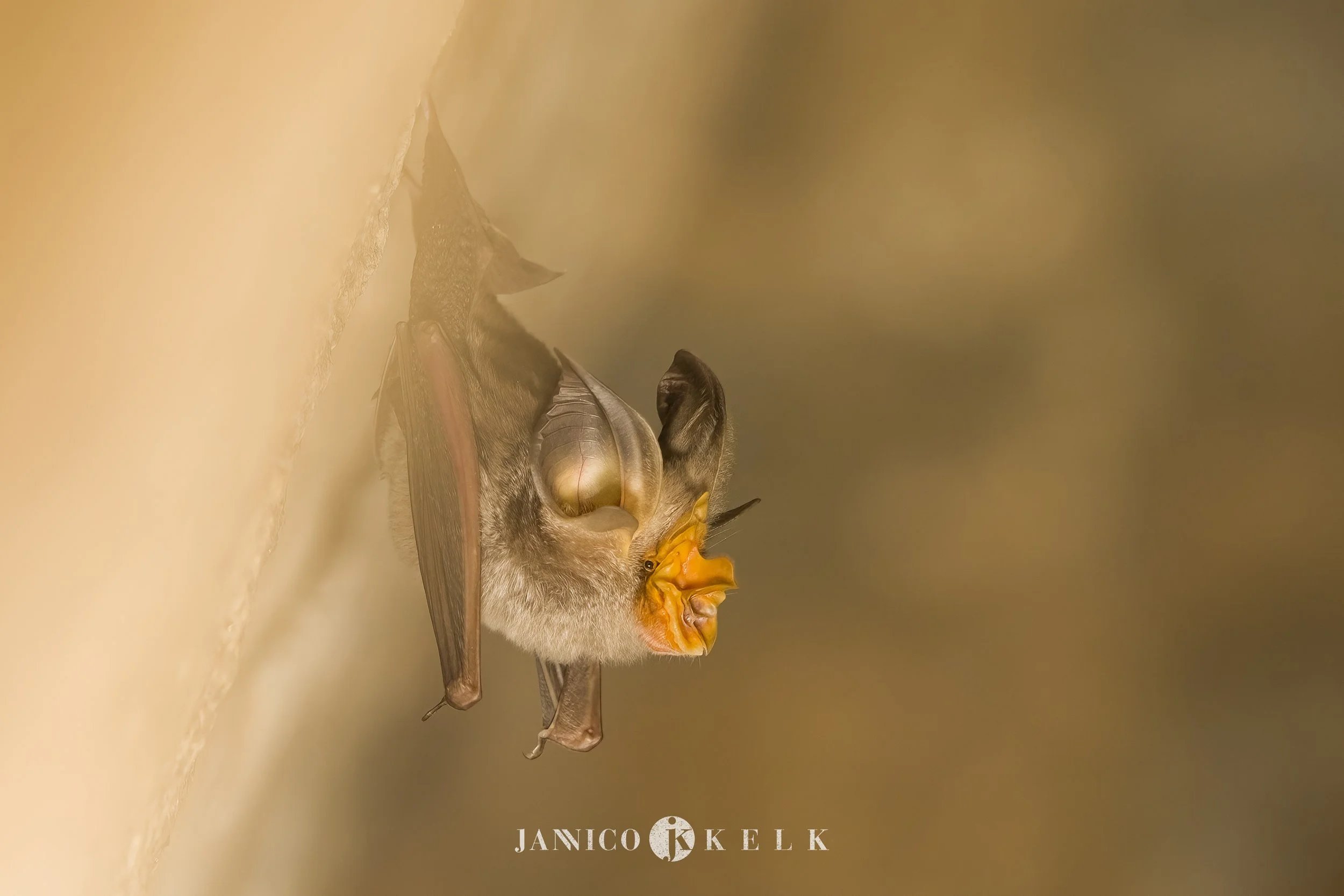
Large-eared Horseshoe Bat (Rhinolophus robertsi)
Parts 3 and 4 are ongoing surveys.
3. Listening and logging, long term
Acoustic monitoring lets us see how males and females use the caves differently across the season, and gives us a picture of the population more broadly. We've also installed temperature and humidity loggers inside and outside the cave to track how the environment changes through the season. The hope is to match those environmental shifts to changes in the population — or in how the sexes use the caves.
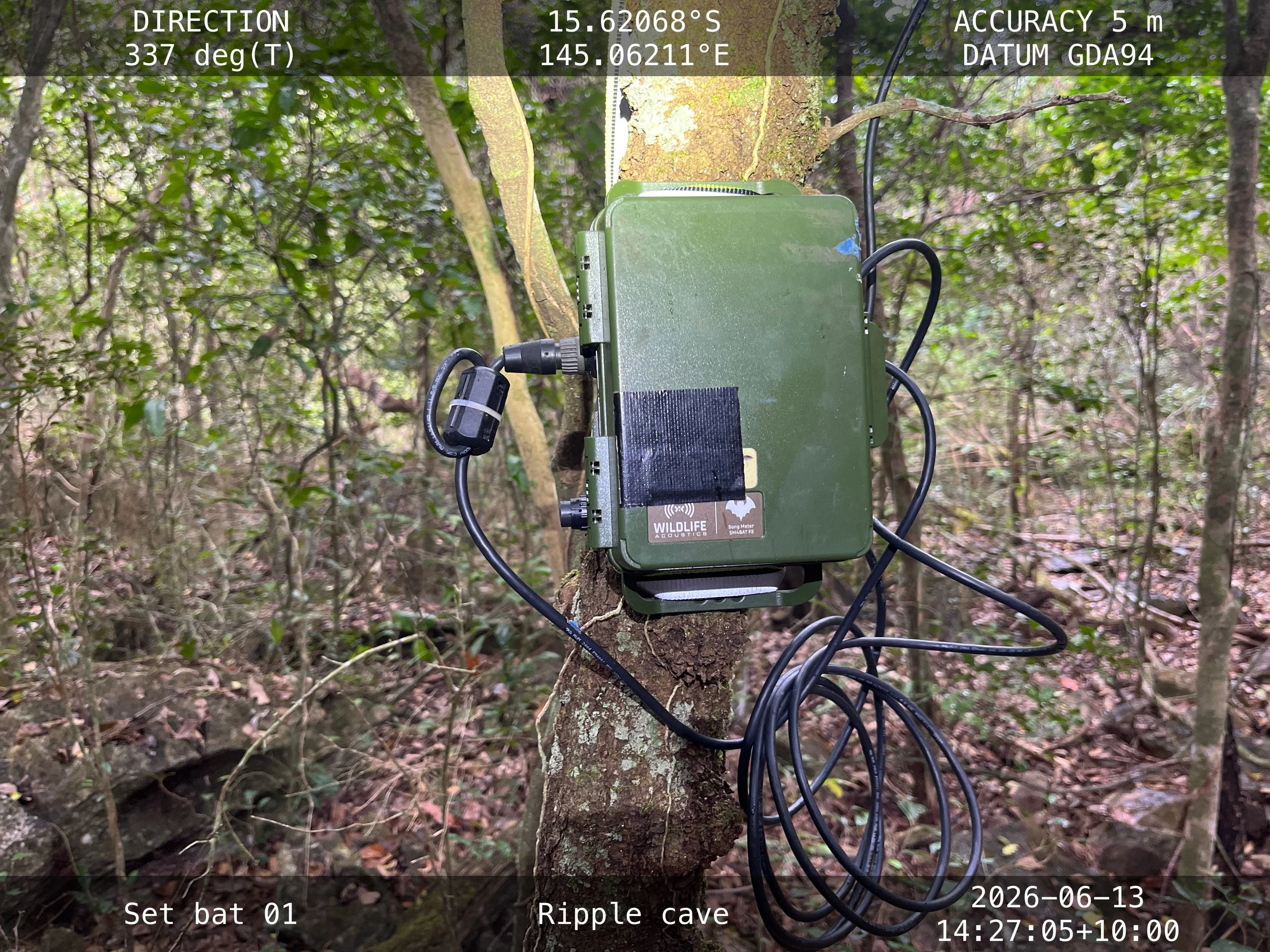
4. Watching the cave entrances
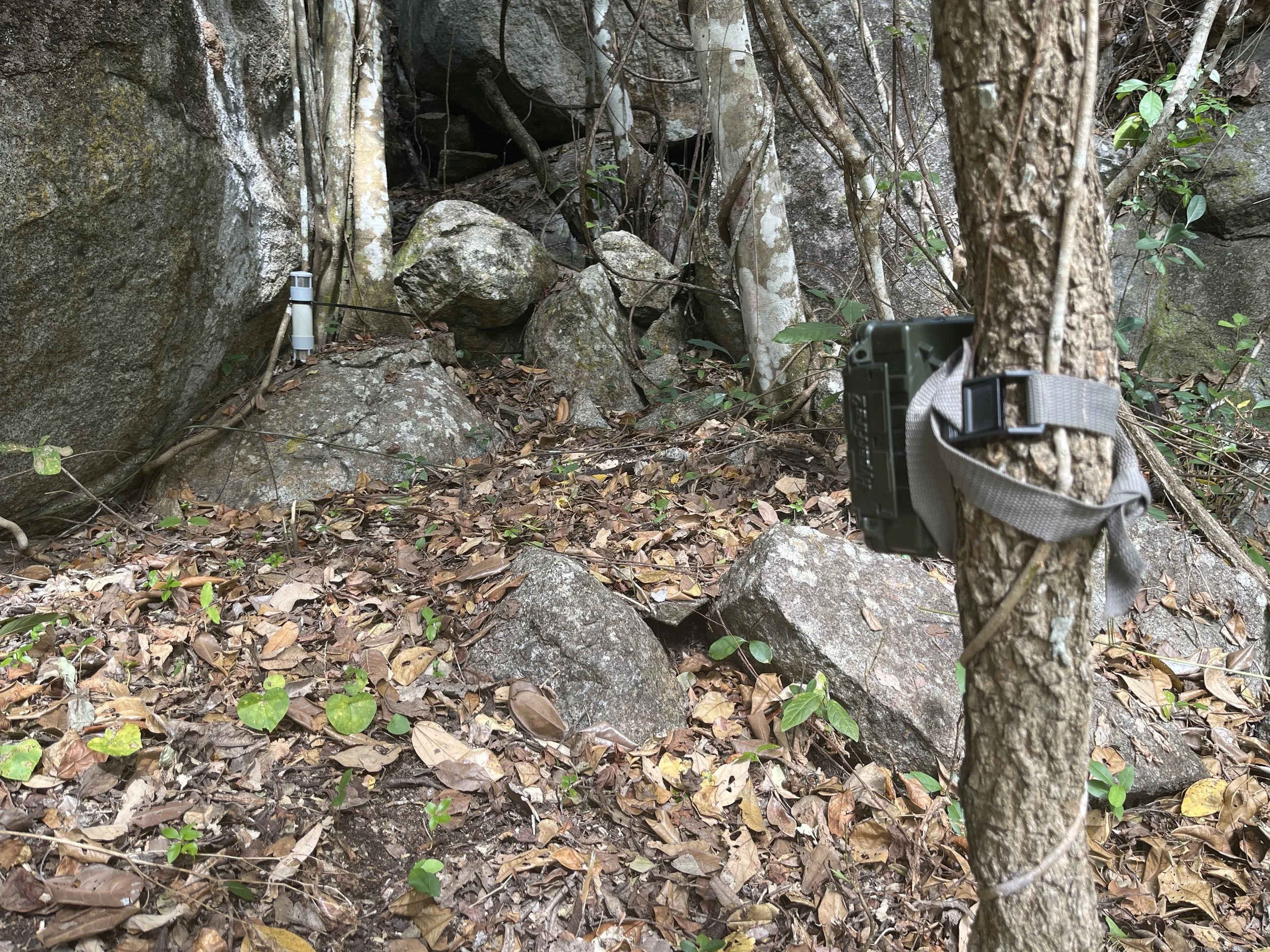
There's a small but growing body of evidence that feral cats enter caves and prey on bats. Leaf-nosed and horseshoe bats may be especially at risk, because they can feed on the ground as well as in flight. So we're setting up cameras inside and outside caves to find out whether cats are getting in.
The Trip
Here's the trip report: we started parts 1, 3 and 4. Part 2 happens later this year, and parts 3 and 4 are ongoing — trips every two months to swap out batteries and SD cards.
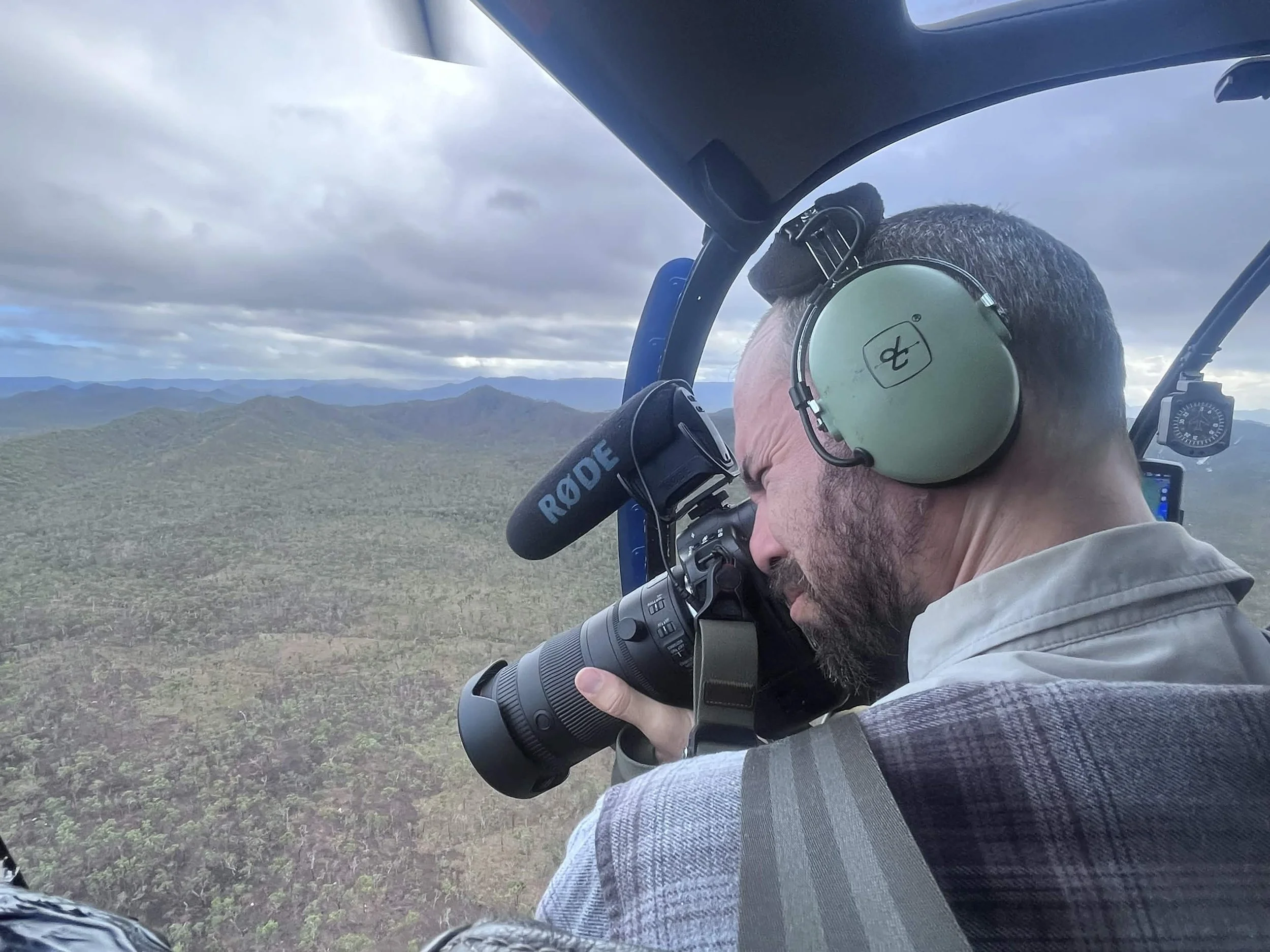
In late June, Jasmine, my good friend Nico and I woke at 3am, drove to Kings Plains Nature Refuge, loaded our bags with detectors, cameras and loggers, jumped into a chopper and were dropped into two karsts containing four caves: Western Karst, and Melody Rocks — containing Angel's Tears, Wallaby Cave and Ripple Cave.
Western Karst
I've been visiting Western Karst for nearly a decade. We know there's a large roost of ghost bats (Macroderma gigas) there, but we have no real understanding of the other species that may use the same cave. It's hard to explain how much I love this place. I've spent only a few hours at this particular outcrop in that decade, yet it's been the centrepiece of some of my favourite trips and images. From the top of the karst you can see the Henderson Range and the full extent of the land locked up for conservation.
After deploying all the cameras, recorders and loggers, we jumped back into the chopper and flew to Melody Rocks.
Melody Rocks — Wallaby Cave and Ripple Cave
Melody Rocks is technically three caves within the same karst system. I visited Wallaby Cave seven years ago, however, I've only seen photos of Ripple Cave, and I'd never heard of Angel's Tears until Tim mentioned it a few days earlier. So finding these caves wasn't going to be easy. The clock was ticking, and we had only a few hours to reach each cave and deploy the gear before the chopper returned.
Strangely, I had to be the hard arse on this trip, getting the others to hurry up. Which is funny, as Jasmine is generally the timekeeper in our relationship. Anyway, after we found "Mt Argument" and hiked down the valley of "Hurry Up," we managed to find Wallaby Cave.
After deploying at Wallaby Cave, we brought out the maps. Tim, the director of SET, is great at many things. But he is not great at details. On a previous trip he sent me the following field plan. Basically, he wanted me to climb down into an abandoned mine on another property, collect some ghost bat genetic samples and maybe count how many bats lived there.
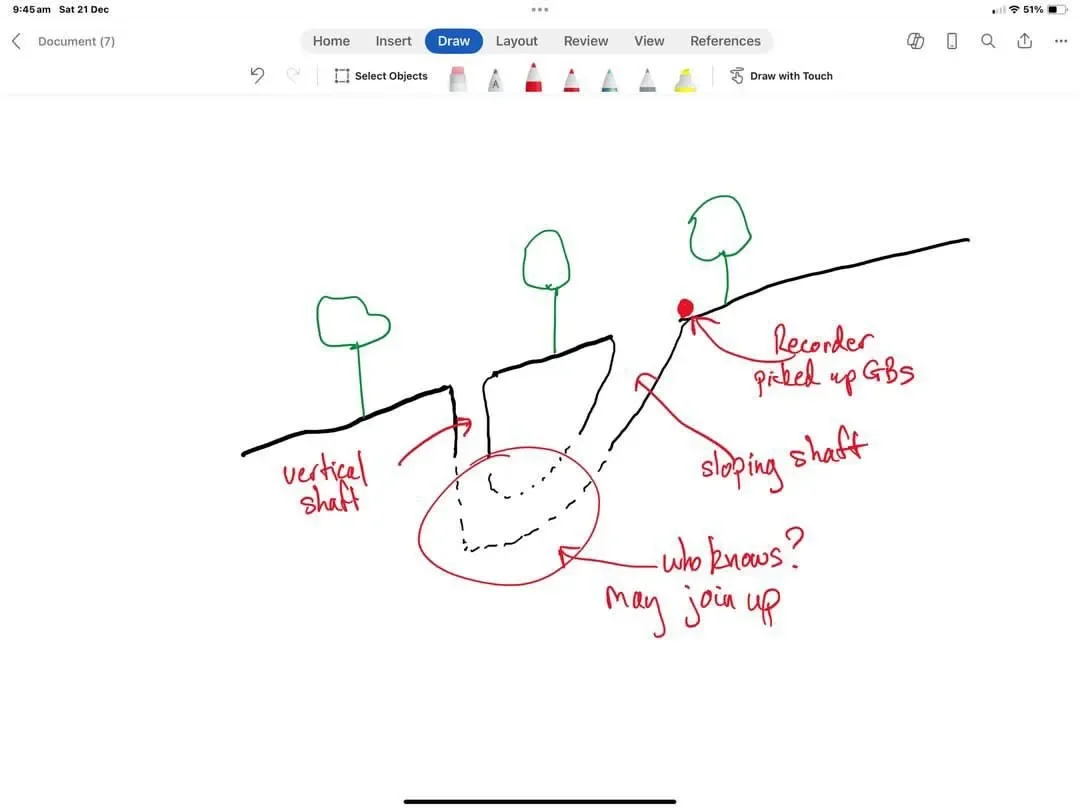
"Who knows?" still makes me laugh to this day.
So this was the map Tim gave us. While kind of annoying, it really added to the sense of exploration. Once I made that mental switch, the entire trip became the type of adventure I adore.
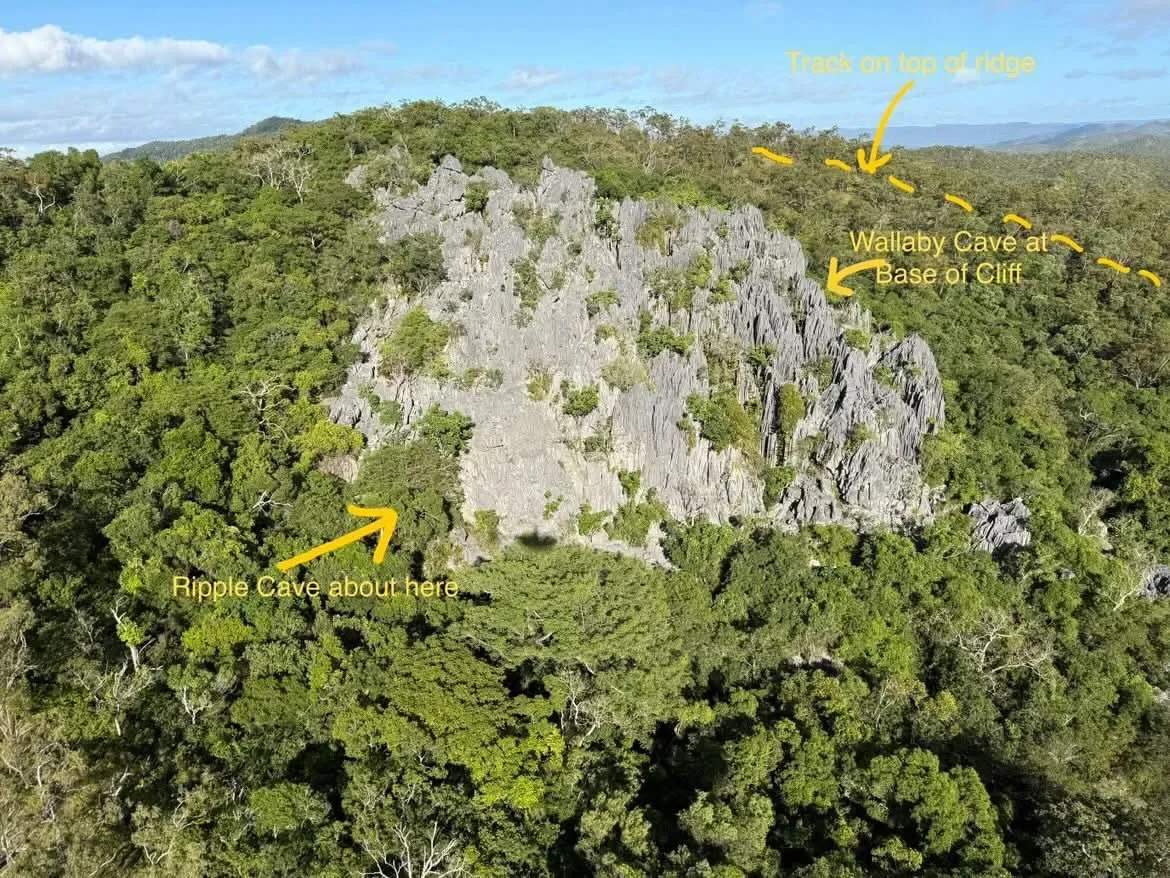
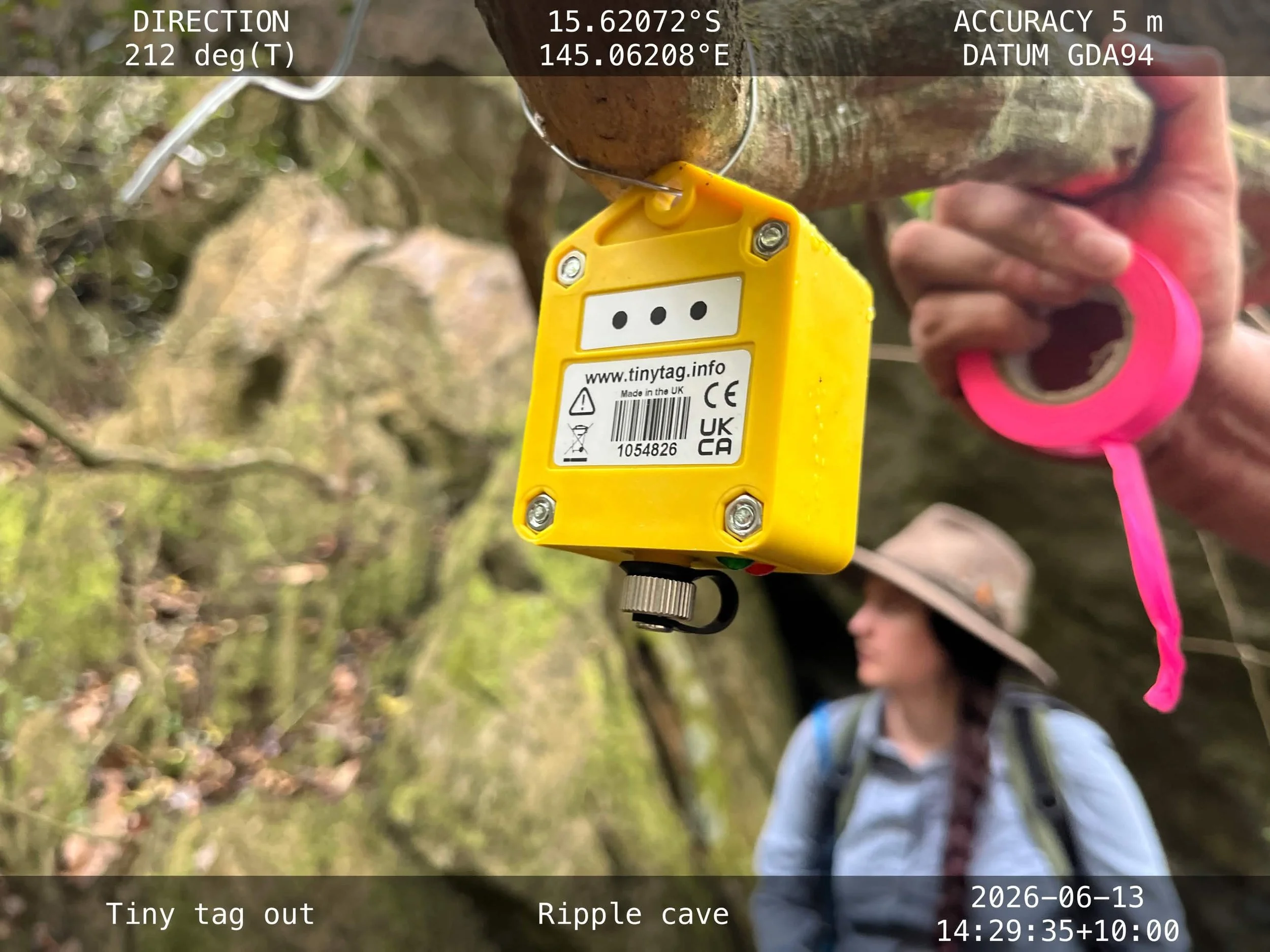
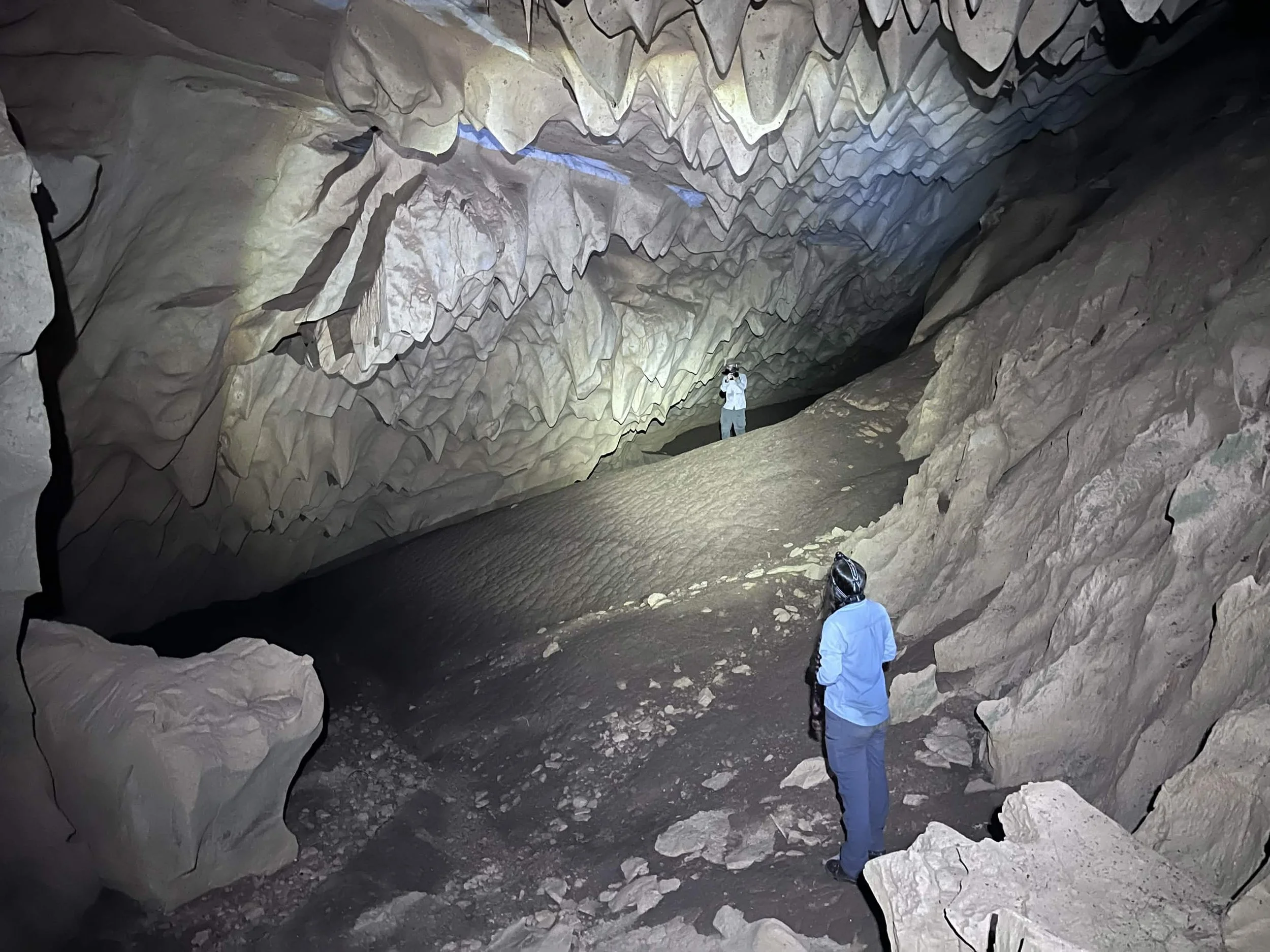
Using that map, we hiked to the very top of the track above Melody Rocks, then down the left-hand side, pushing our heads into anything that might resemble a cave. After two hours of running around in circles, with quite a bit of frustration, we eventually found a giant opening. It's hard to explain, but basically we had to crawl through a tight boulder squeeze that opened out into the vast, 30 metre tall Ripple Cave.
In the photo you can see the tiny opening behind Jasmine that leads into it. You can see the beautiful ceiling pattern — and why it earned the name Ripple Cave.
Melody Rocks — Angel's Tears
After deploying our gear at Wallaby and Ripple Cave, we had only two hours to find Angel's Tears. Again, the instructions were vague, and we were in a physically demanding spot. Both Ripple and Wallaby Cave were surrounded by what's called "vine thicket" — a dry seasonal rainforest community, dense and tangled, with scattered tall emergent trees. Oh, and everything is spiky and wants to hurt you.
On top of that, I'd also broken the two-way radio falling (exploring) into a small cave, so we had no way to ask for extra time. So we quickly climbed up Mt Argument, through the Valley of Hurry Up, pushing through a forest of vines and loose rocks — and found ourselves back at the road about 40 minutes later. We then found the nearest bit of rock to Angel's Tears.
Again, we didn't really know where we were going. Only that the last time someone was here, a man had to be medevacked out. He'd split open his leg on sharp limestone sharpened to a knife's edge by millions of years of rain.
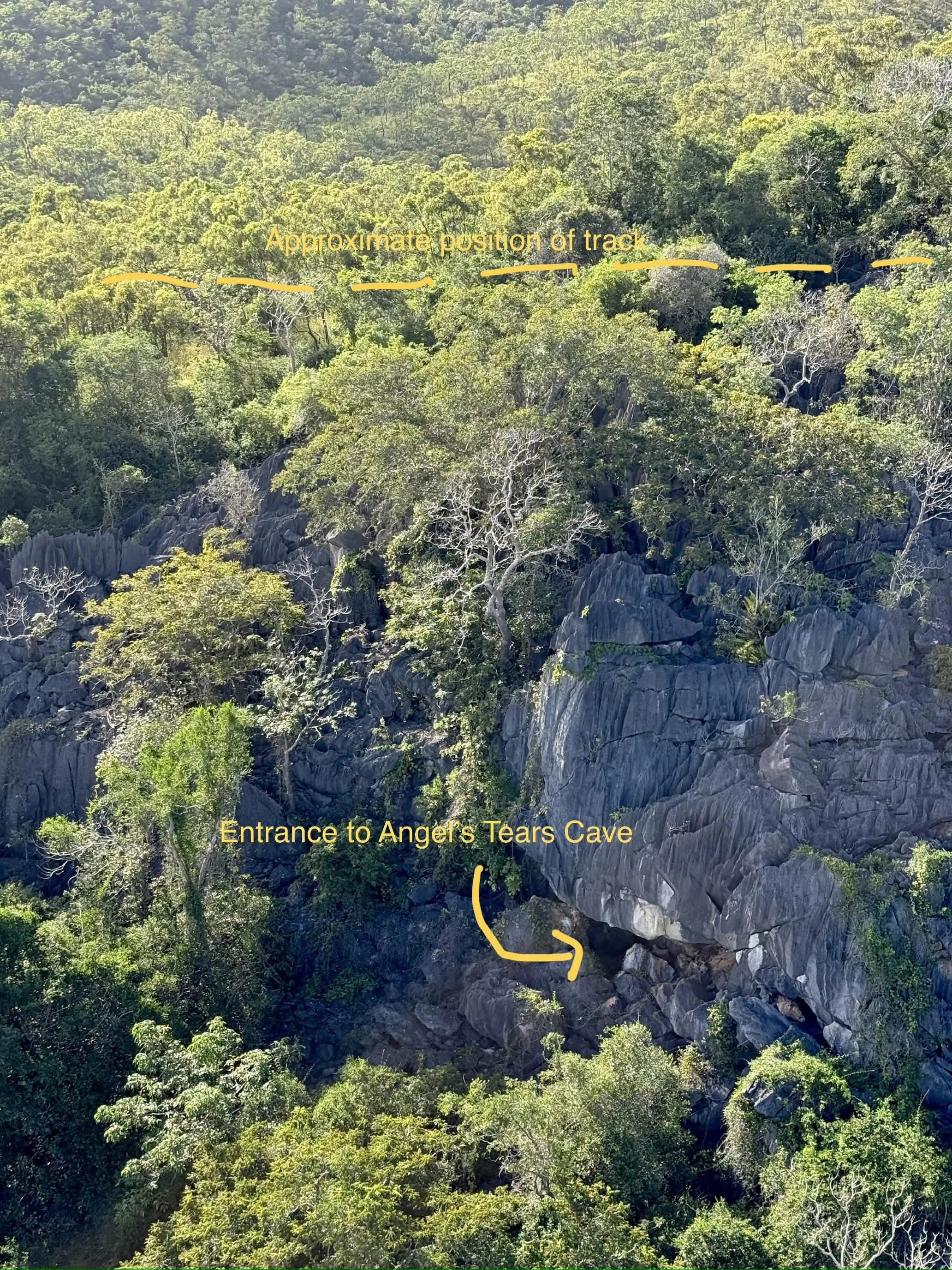
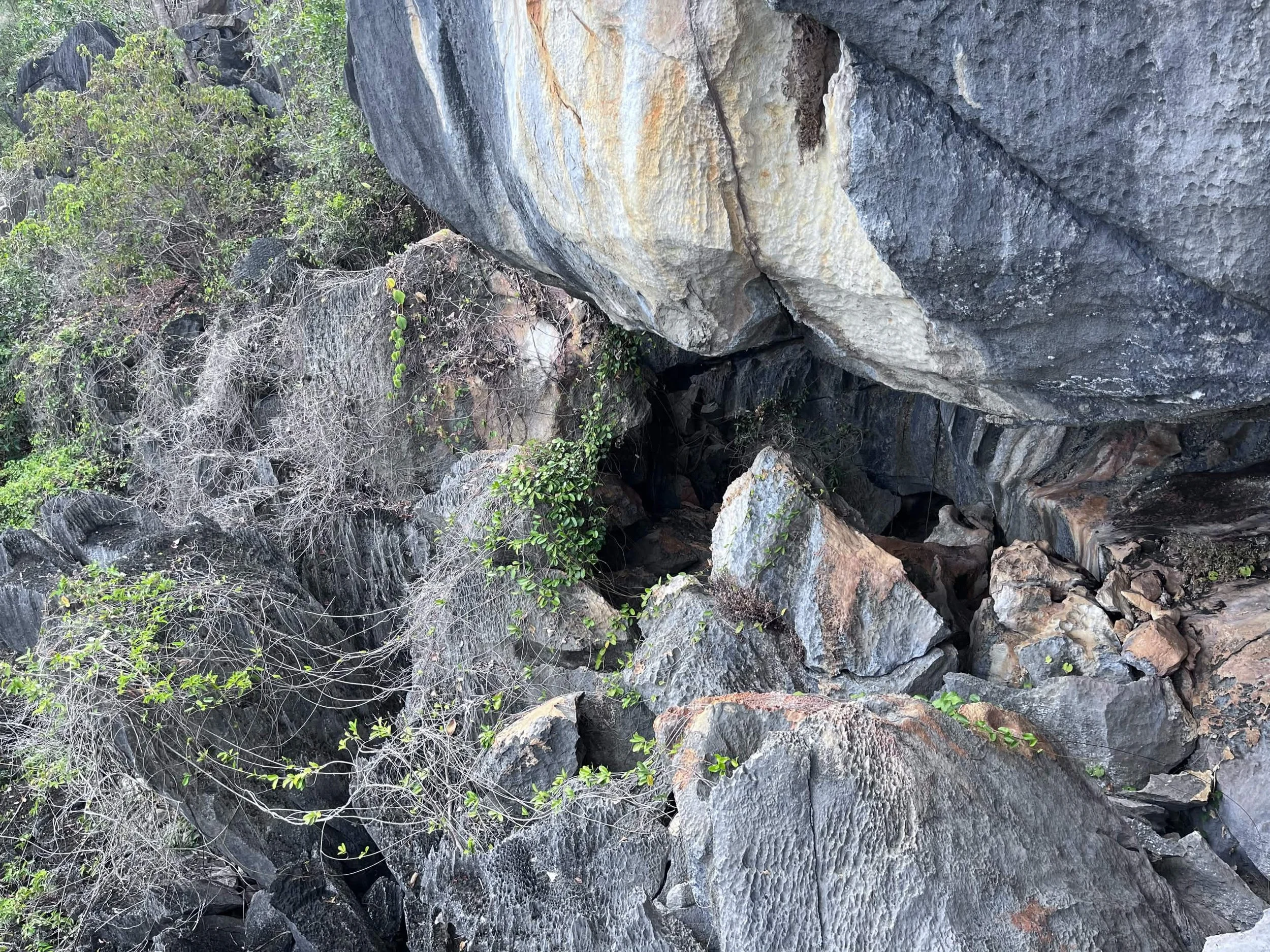
Eventually we found where the arrow was pointing. But all we found was an overhang: no opening, no entrance, no cave. There were, however, quite a few signs of bats. Lots of scat and bits of prey around the overhang. We were disappointed, thinking we were either in the wrong spot or, worse (much worse), that the entrance had caved in.
Dismayed, we hooked it back to the track and literally ran to the helipad. We could hear the helicopter in the distance. If you haven't spent any time in choppers, there are two rules:
Don't keep the pilot waiting
Do what they say.
We arrived just in time, covered in cave debris — consisting of bat shit, dead animals, dirt and sweat.
We flew out of Melody Rocks and straight to The Pimple.
Here is where we start Part 1 of the Project.
The Pimple
See that small limestone outcrop bursting out of the rugged hills? That is The Pimple, and it was our home for a week.
The Pimple, named by Tim, is a small karst outcrop that's home to a maternity roost of Semon's leaf-nosed bats. To our knowledge, it's currently the only known maternity roost for the species. Despite that, no one has looked inside: we only had acoustic data.
While Jasmine, Nico and I were deploying gear at Western Karst and Melody Rocks and not finding Angel's Tears, the rest of the team made Base Camp.
I spent the late afternoon setting up hammocks for Jasmine and me, while the rest of the team got the trapping gear ready. We split into three teams, looking for suitable cave entrances. We found a handful, which we named after our cats: Taro Cave, Miso's Entrance and Sora's Pass.
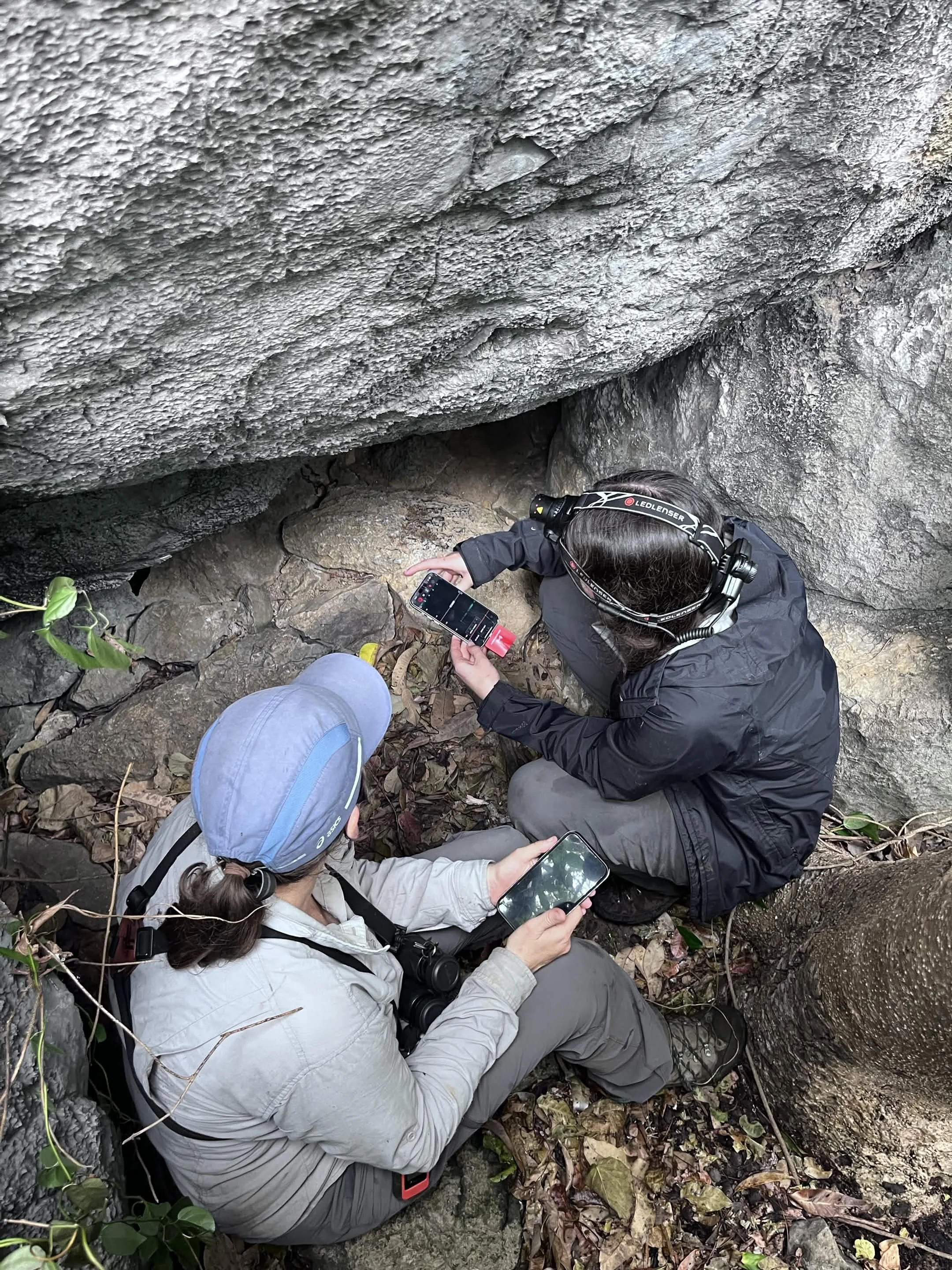
Dr. Liz Williams - the team leader and bat extraordinaire accompanied by Jasmine listening for Semon’s using a bat detector.
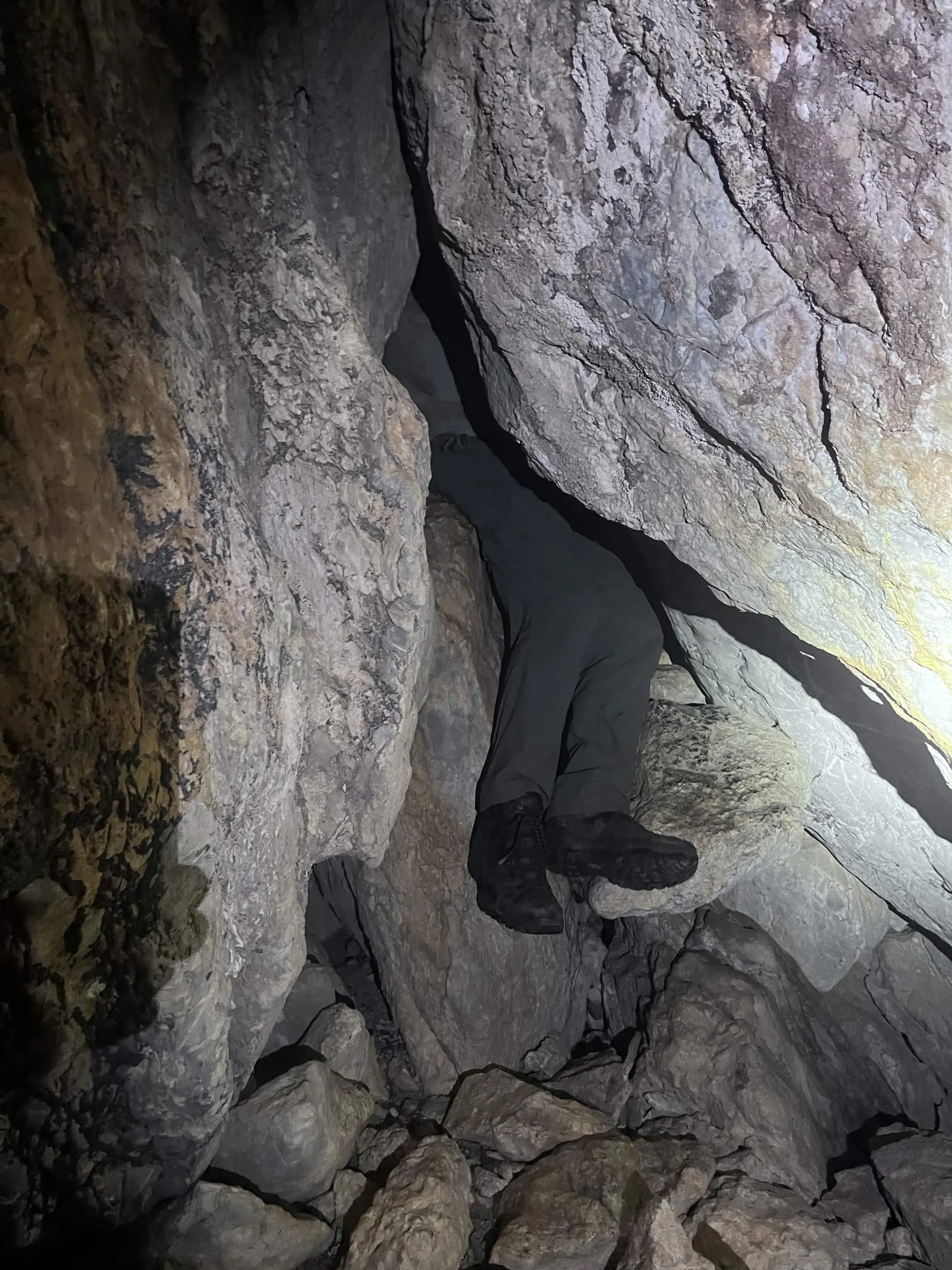
Nico and I climbed into Miso's Entrance, and after exploring for a few hours we realised all the caves were interconnected. Excitingly, we also found our primary target, Semon's leaf-nosed bat. Even better, they were in good numbers.
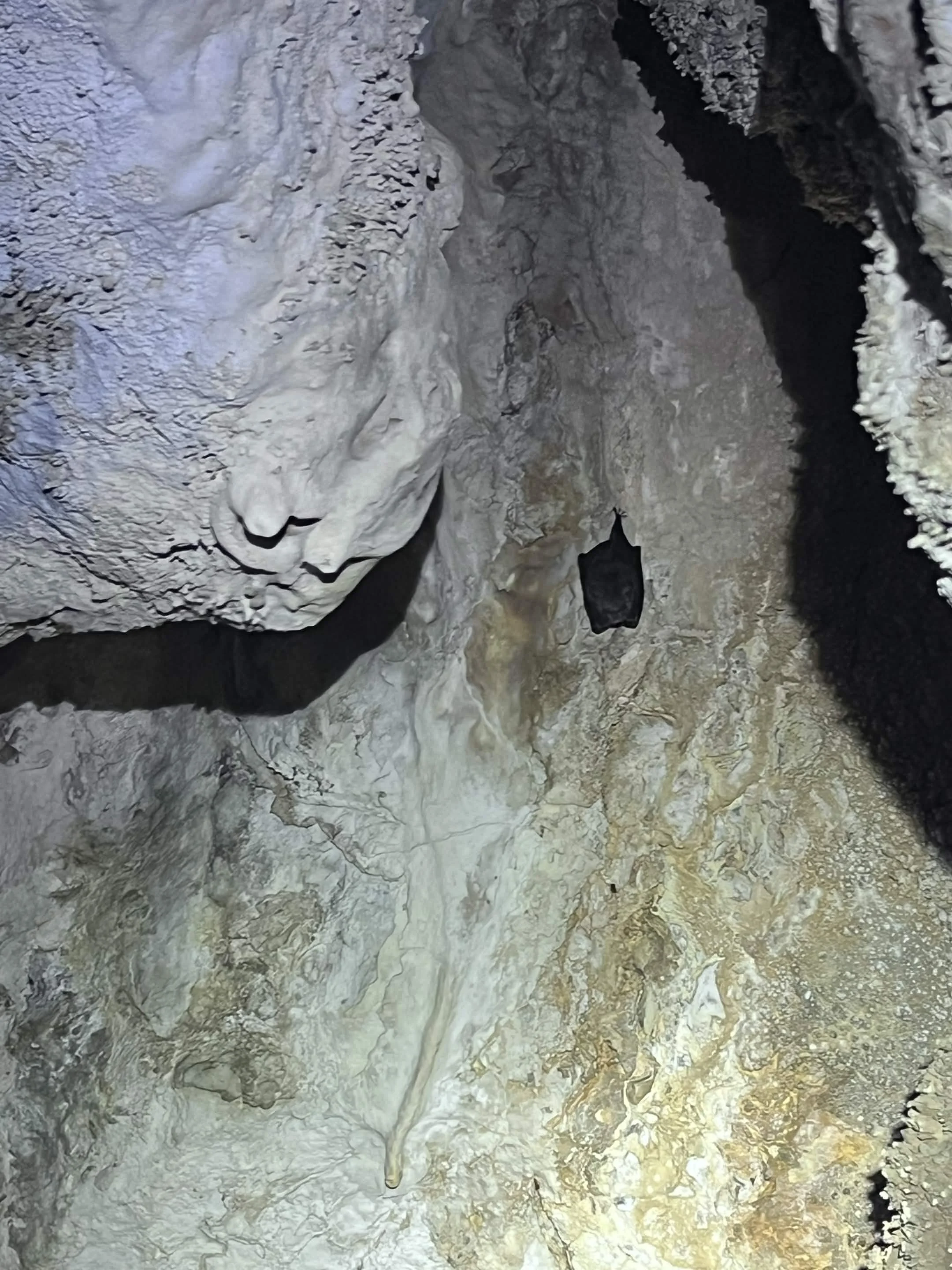
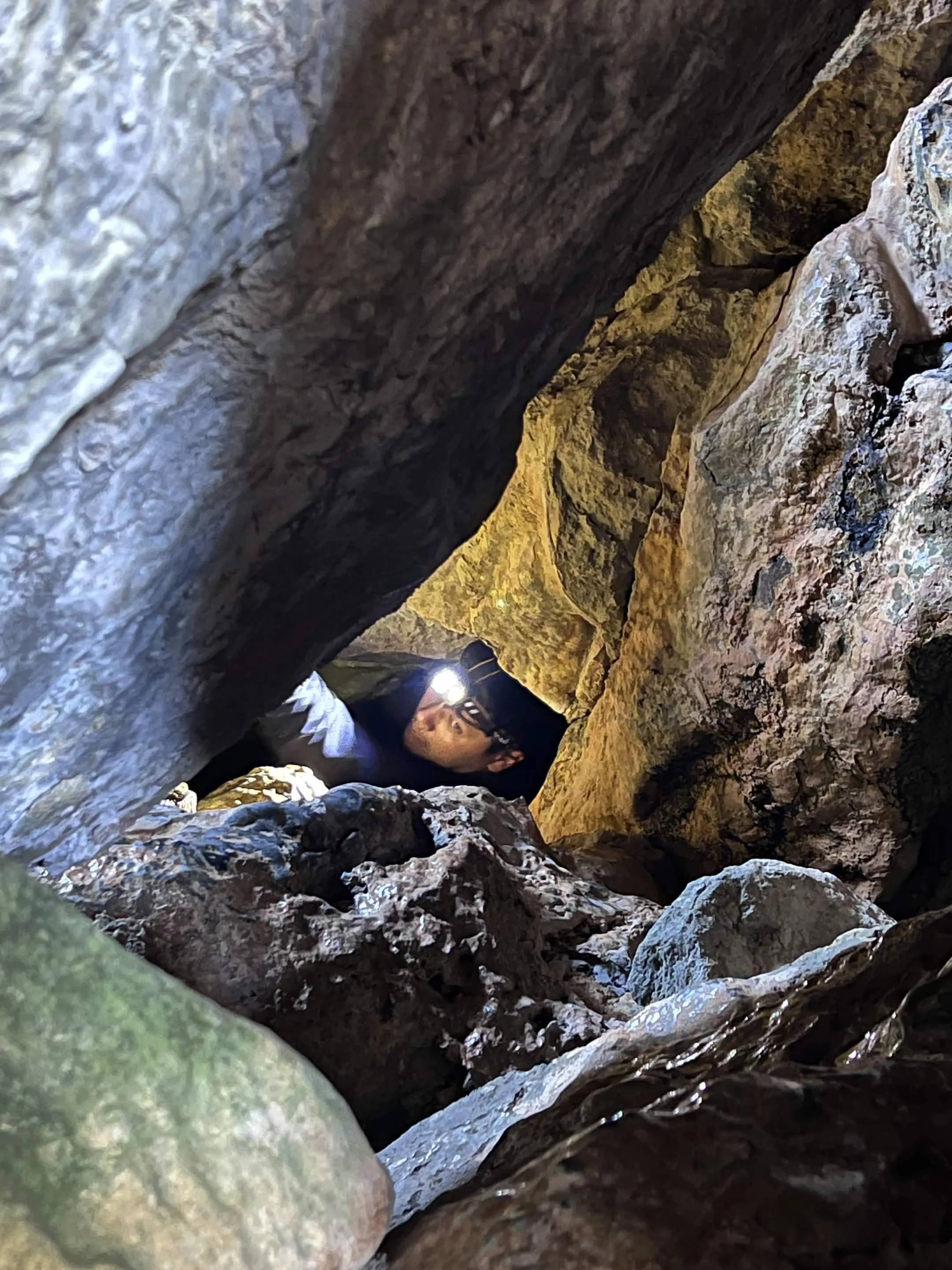
We also found a few non-targets. The most common was Troughton's sheath-tailed bat (Taphozous troughtoni). They're relatively common and can be found in boulderfields or rocky outcrops, where they roost in the twilight zone , the dimly lit area near a cave entrance.
In the background of the video above you can hear a Semon's. We were using a device called a Walkabout, which records bat calls and transforms them into a frequency we can hear. That frequency is at 94 kHz, which keys out to a male Semon's.
As Jasmine and the rest of the crew got the trapping gear ready, Jon and I prepared to set a mist net inside The Pimple. Funny story: I've known Jon for quite a long time. We went to school together. Jasmine and he went to university together. We bump into each other at the same field sites. Michael, another guy on the Project, actually grew up 15 mins down the road from me and we hung out in the same locations little weird nature kids hung out circa 2000. Now all four of us 15 years later were catching bats together on a small rocky outcrop in remote north Queensland. Ecology is a small world.
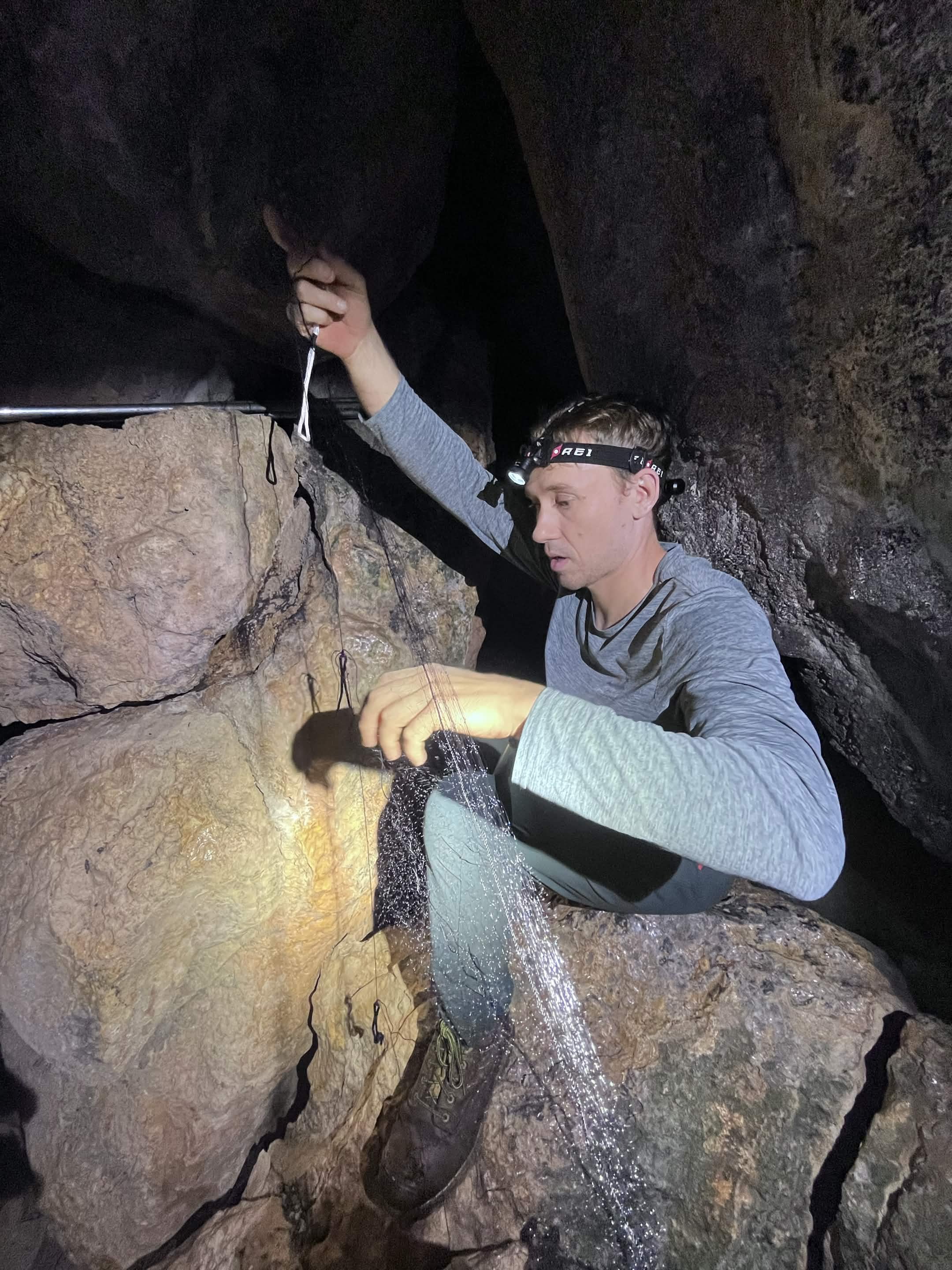
By the time the crew had mist nets up outside each cave entrance, Jon and I had ours set inside The Pimple. Then we waited for sunset.
Within a few hours we had caught several Semon's. After taking genetic samples, measurements and a handful of cute photos, we attached small radio transmitters, released the bats and watched them fly off.
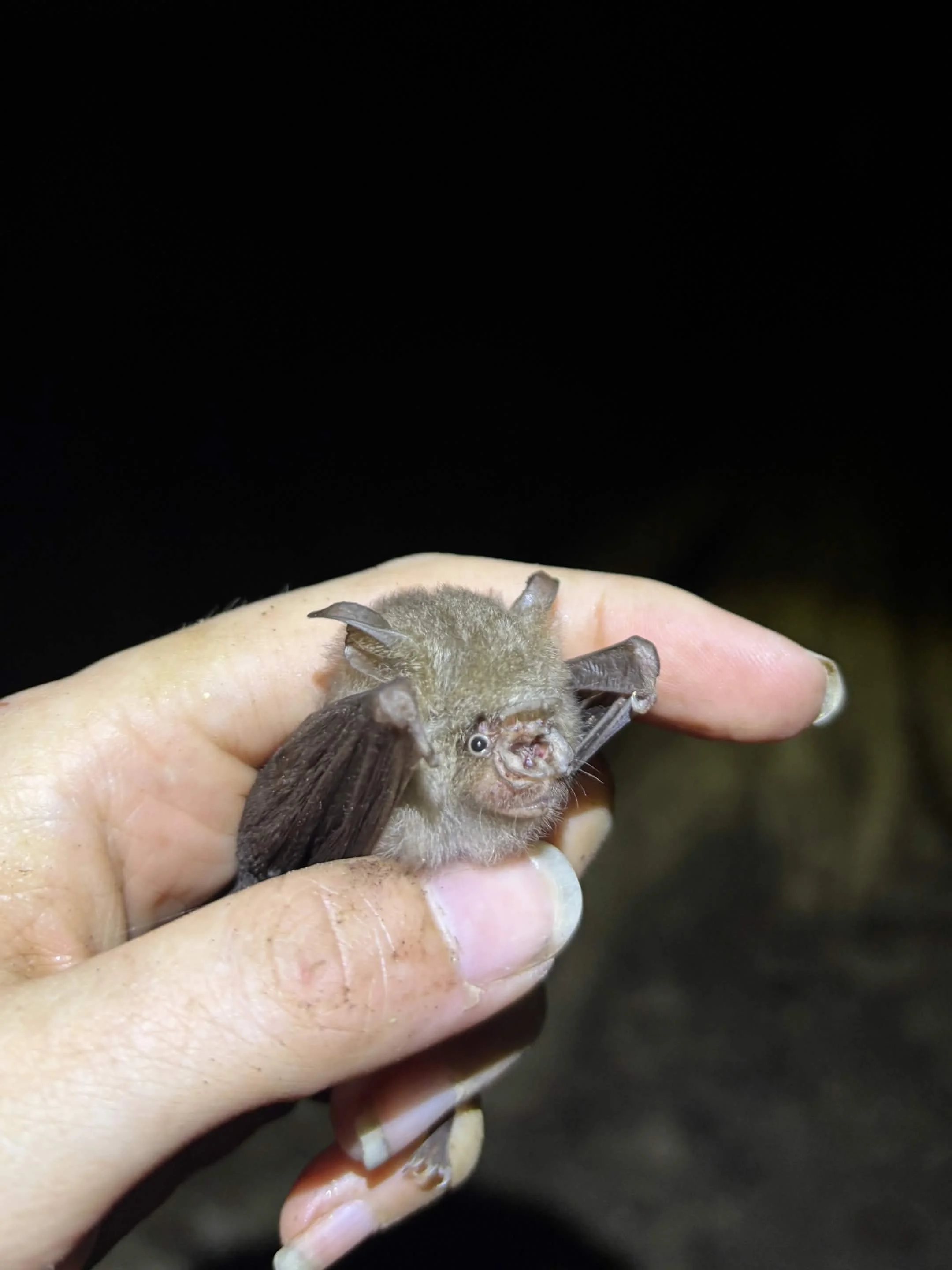
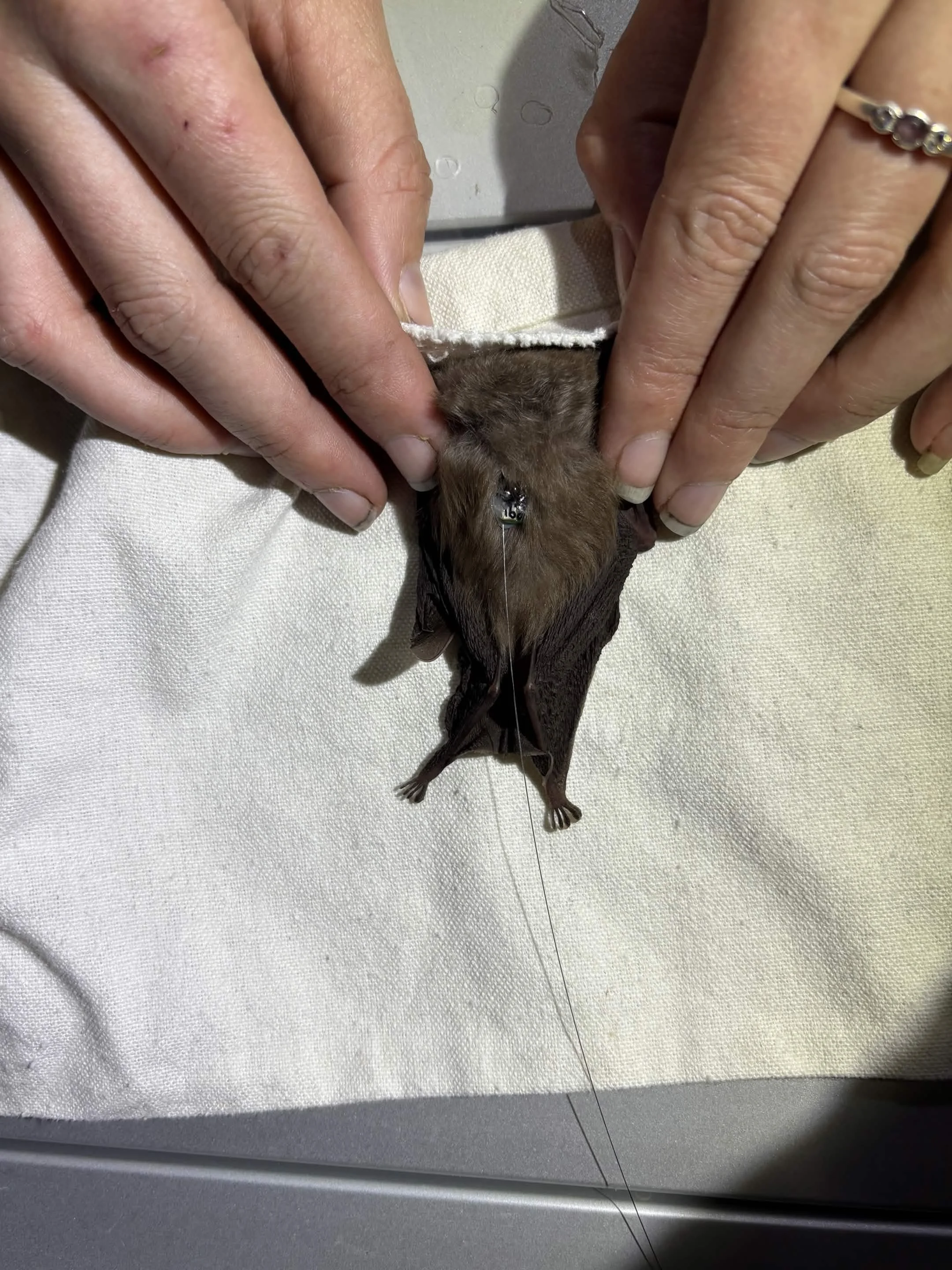
From there we grabbed our radio-tracking gear, split into smaller teams and hiked up to three different hilltops, where we started tracking.
We repeated this for the next four nights. The nights were long and often quite repetitive: listening for a beep, taking a compass bearing, changing the channel, listening for another beep, taking another compass reading. This was all timed so that each team was tracking the same bat at the same time. Using three separate data points, we could ideally triangulate the bat's location in the landscape.
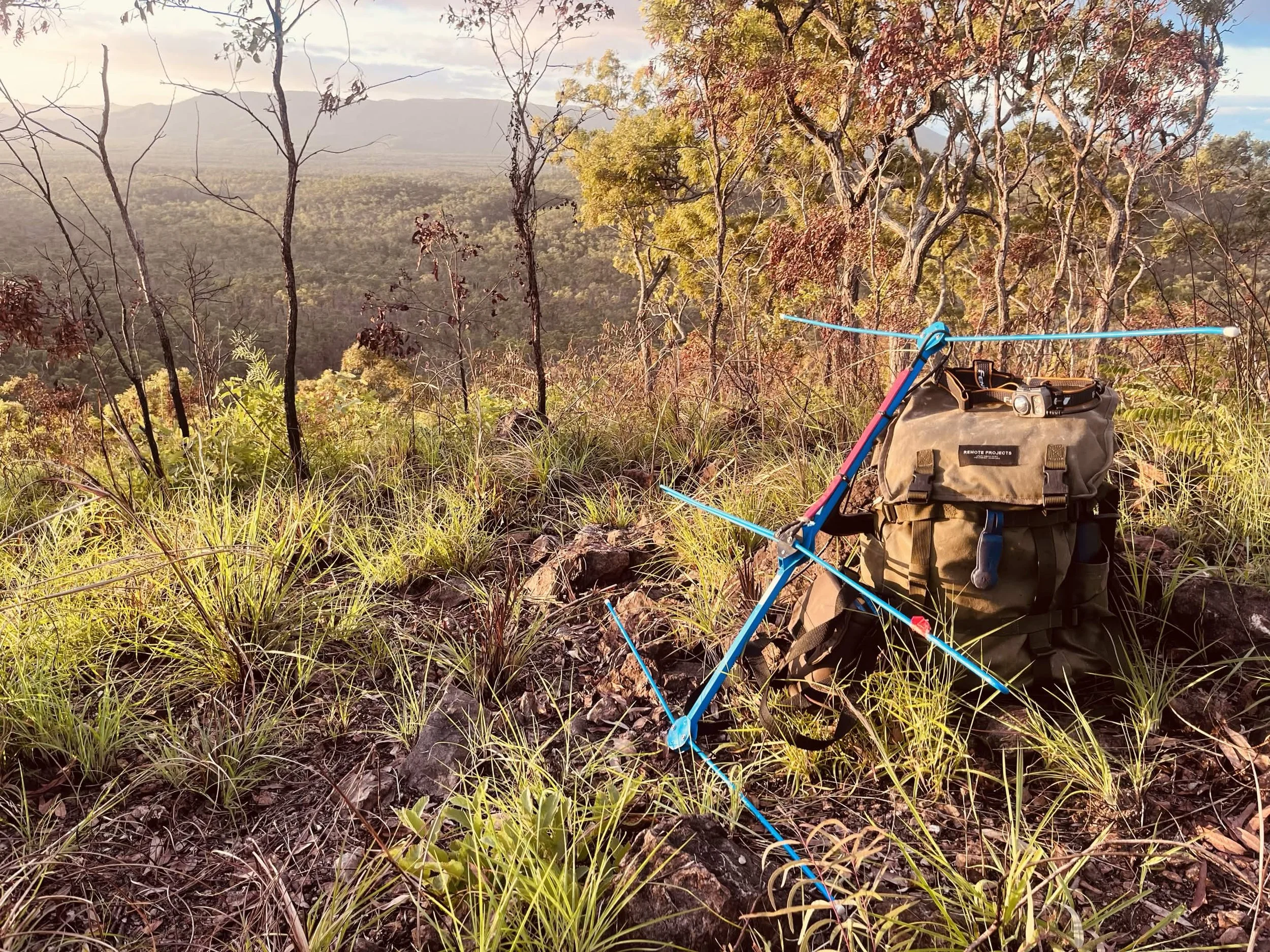
All of this is the ideal… Field science, though, is often not an exact science or ideal. I remember sitting in the dark, in the rain, listening as a beep became quieter and quieter. The air would fill with the scrambling feedback noise of the radio-tracking gear, and each team would check in over the two-way radio, "Yep… I've got nothing." Only for the animal to return hours later and head straight back into The Pimple.
Other individuals were great. With those, we could get an immediate, high-level understanding of how they used the landscape: using the valleys to travel, then foraging along the creek lines. One animal landed beside Michael and Liz, and they watched it ambush prey from a rock overhang. As far as we know, this is the first time ambush hunting has been recorded in this species.
Angel's Tears — Take Two
After a successful week of catching and tracking bats, we started to pack Base Camp down. Getting ready to demobilise, I was speaking to one of the older fellows, Chris, about Angel's Tears. He was the man who discovered the cave 20 years ago. Chris was a great guy with lots of stories… some of which I couldn't work out were real or not. But after spending a week with him, I can say with confidence that at least 80% of them were true.
He was also the man I mentioned earlier, the one who cut open his leg at Angel's Tears and had to be choppered out. On top of that, his knees were not what they used to be. He said we'd been in the right spot, but that the opening isn't obvious: it's a tiny hidden entrance that opens up into a maze of channels and chambers.
With that knowledge, we jumped on the radio and asked the chopper pilot, Toni, if we could quickly run back to Angel's Tears to deploy our cameras, recorders and loggers. Chris and I made a little field kit of muesli bars and two litres of water, and headed back.
As we were flying, the Toni said, "I'm actually in the middle of fighting a fire, so I probably won't be back until 4pm. Is that okay?" I thought about our small lot of muesli bars and the smidge of water we had left, and realised we didn't have a choice anyway. "Yeah, sure, Toni… See you in the arvo."
The good thing was, we had all day to explore the region. It was genuinely wholesome and fun. We found a handful of new smaller caves, some Indigenous rock art, and signs of quolls, rock wallabies and bats.
We eventually returned to Angel's Tears. Chris was a trooper: despite a bung knee, he made it to the entrance with me. He also showed me the spot where he'd split open his leg.
Chris showed me the opening to Angel's Tears. It was tiny. And at one point during that first day, to my horror, I had been standing on top of it.
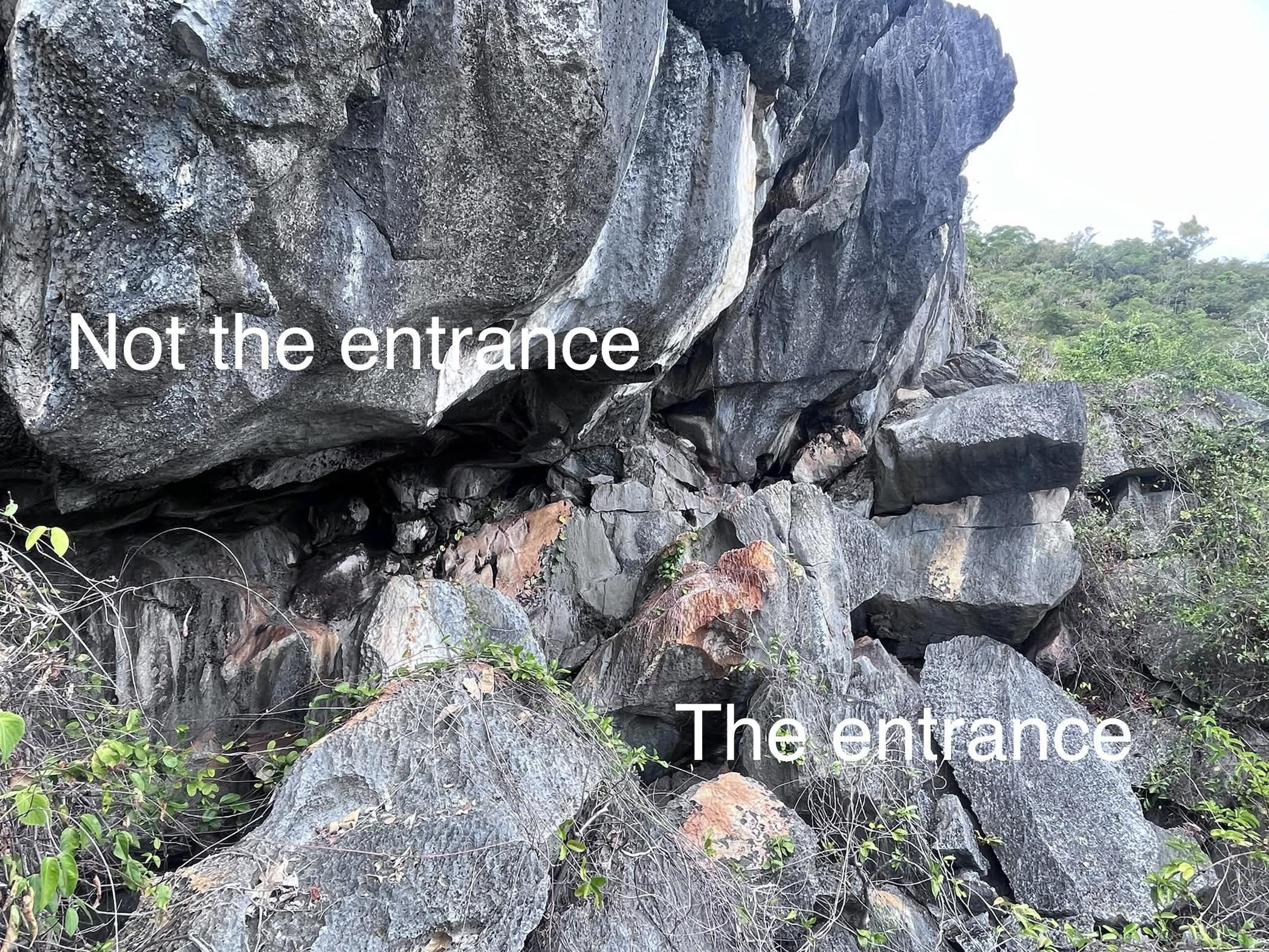
What I'm standing in here is the entrance
Chris started explaining the cave to me, saying there were multiple levels, with large caverns at the end of each hallway.
He then explained I would be going in solo. He said he was getting too old for this, that this might be his last big field trip. And more importantly, that these caves were now ours to protect. It was a touching moment, a sweet handing down of knowledge and stewardship.
I'll be honest, I was nervous. I'm relatively experienced at caving, but going in alone was something I had not done before… nor would I recommend it. Especially a cave I didn't know, and once was I moving between levels and squeezing through gaps I probably shouldn't be squeezing through on my own, I did start to reconsider my actions. At the same time, it was too hard to resist. It felt like real exploration, one of the reasons I moved to north Queensland and dedicated my life to wildlife.
The first part of Angel's Tears is a 6 - 7 foot drop, through a small opening that you shimmy down. You then enter the first level: a short hallway with loose rocks that leads to another drop. That drop takes you down to the second level, which has multiple long hallways, all ending in giant caverns. The final level takes you to another cavern, where you can see a second entrance that has caved in.
The entire cave was full of bats: Semon's in good numbers, eastern horseshoe bats (Rhinolophus megaphyllus), bent-wing bats (Miniopterus sp.) and Troughton's sheath-tailed bats. Most excitingly, there were diadem leaf-nosed bats (Hipposideros diadema), a large, carnivorous species I'd never seen before.
Thankfully, nothing too extreme happened. I deployed the rest of the gear and resurfaced. We walked out of the karst and back down to the helipad. Which happened to be right next to a spring-fed creek, so we decided to have a swim and wash the cave stench off us while we waited to be choppered out.
Ghost Bat Photography
We got back to the Kings Plains research station at about 5pm, and I was running on fumes. I devoured a massive bowl of pasta and then got ready to head out to Western Karst to photograph ghost bats. This endangered species is incredibly difficult to find and highly sensitive. We're very lucky to have access to this roost.
I do not recommend that anyone without specific ghost bat experience undertake the following.
Jasmine and I each have a decade of experience, and the area we chose is not used by the main colony. This area is safe, as it avoids the large roost and main entrance, allowing the colony to exit without being disturbed. Additionally, we only visit this cave for photography once or twice a year.
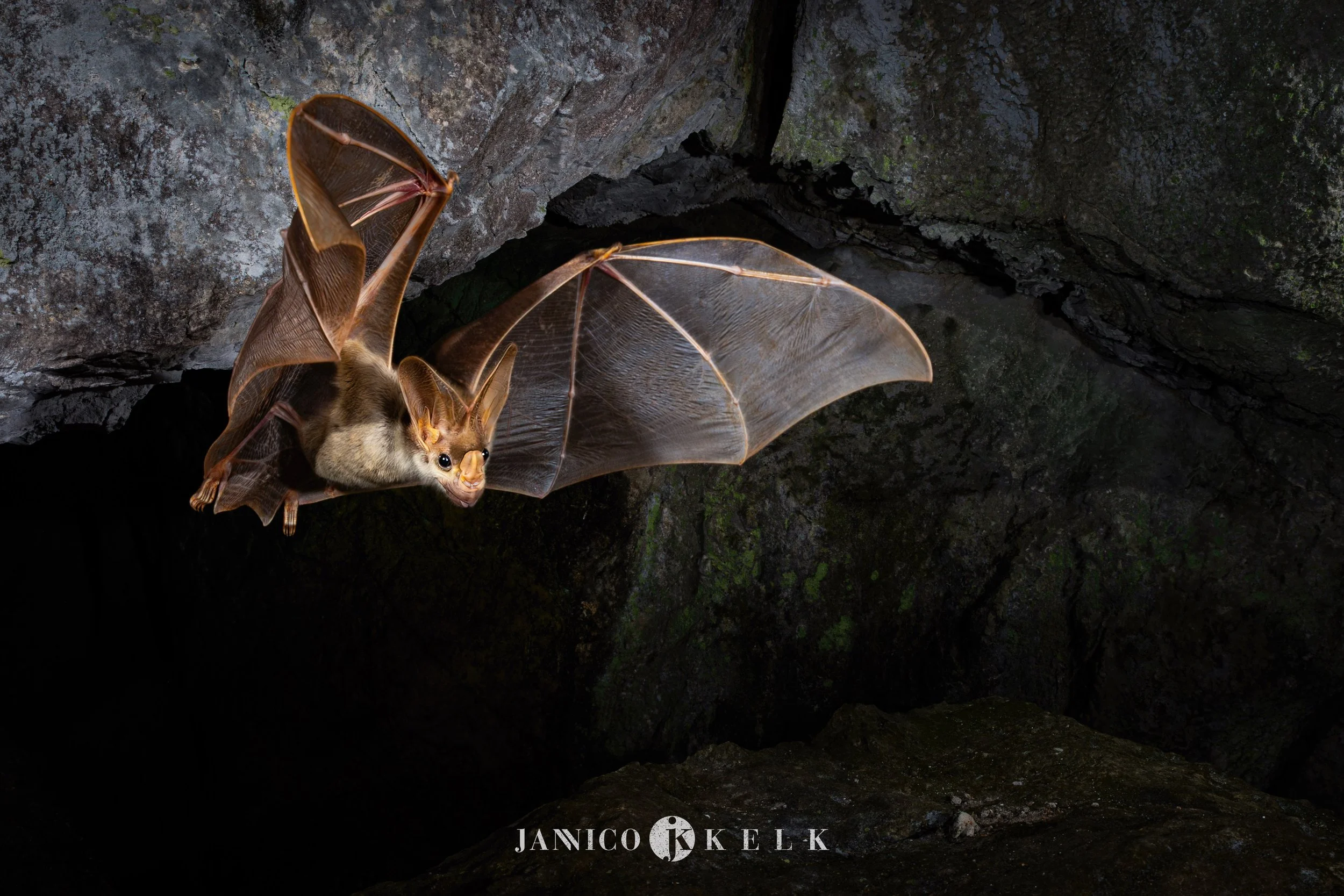
Western Karst was the first spot where we set up recorders, camera traps and loggers. We knew from several other trips, and from other ecologists before us, that a handful of ghost bats roost in a solution tube each night. A solution tube is essentially a tubular conduit formed by the focused dissolution of limestone by weakly acidic water. In cave systems, these tubes are the plumbing: roughly cylindrical passages that water has eaten through the rock. It's separate from the main roost, which is home to around 300 ghost bats.
Jasmine and I hadn't done bat photography in a few months, so we took our time setting up the cumbersome outdoor studio. Each bat set-up consists of eight tripods, five flashes, two cameras and one motion sensor.
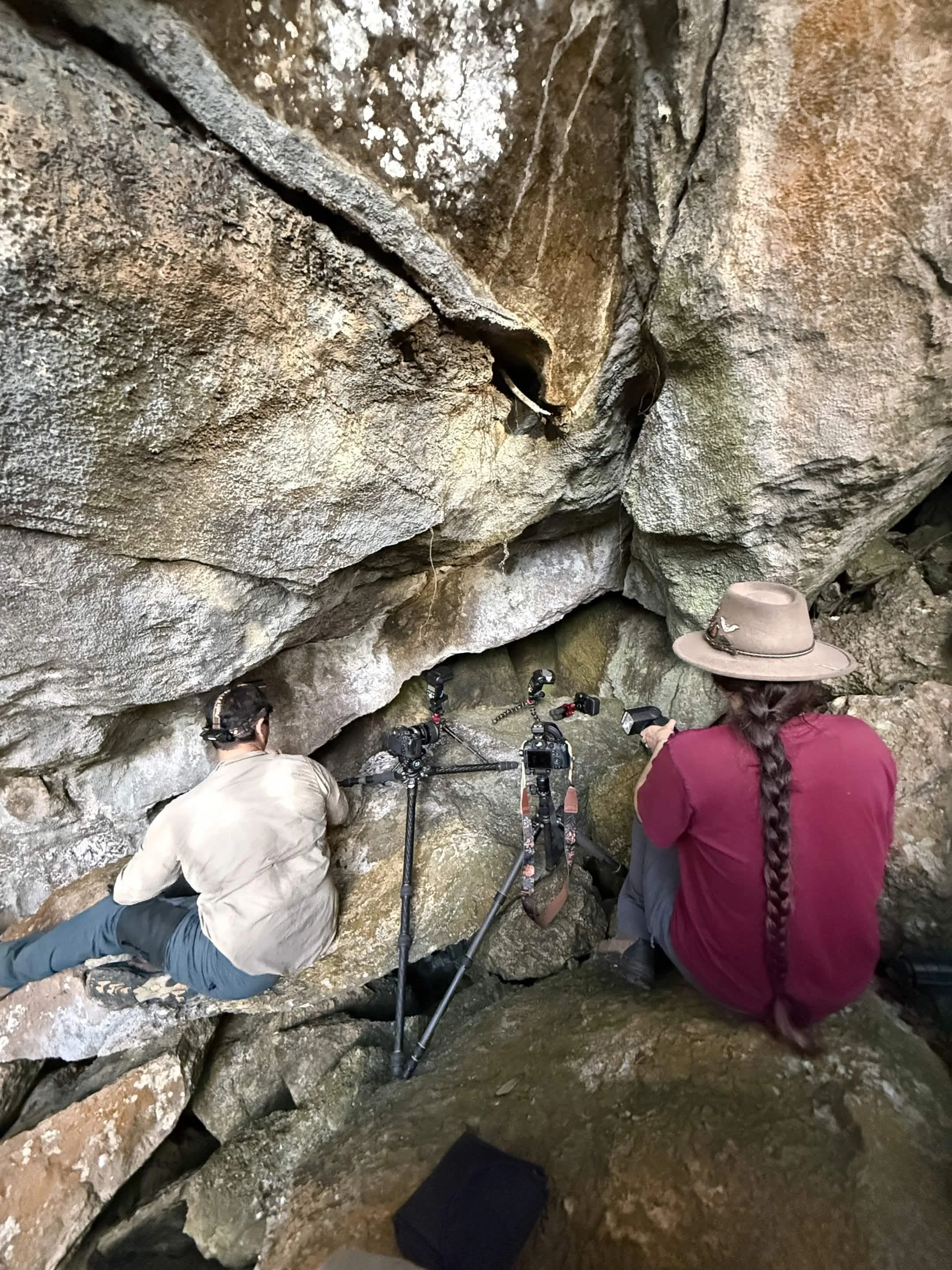
The motion sensor is connected to the key flash, which then talks to four other flashes. These are set off when a bat flies through the motion sensor beam. At the same time, two cameras are set to five-second exposures, running on an inbuilt intervalometer (a setting that fires the camera at set intervals). When the motion sensor is triggered by a bat, the key flash fires, triggering all the flashes and burning the image into the frame. Basically in effect, the flash becomes the shutter.
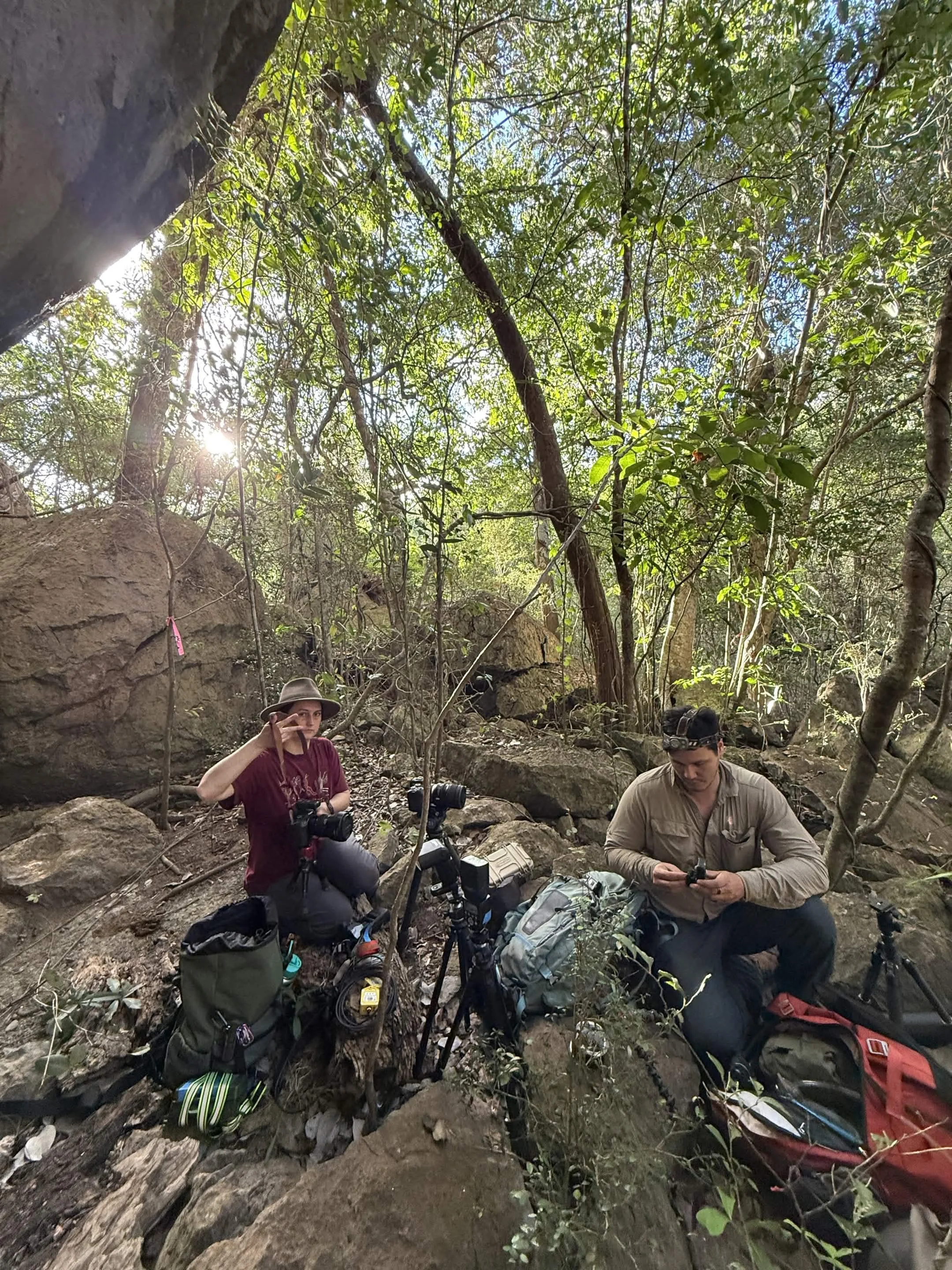
The reason you use four or five flashes is that each one needs to be set to 1/64 power or lower. I prefer 1/128. The lower the output, the shorter the duration of the flash, and the quicker the effective exposure. So with this set-up, the flash is effectively the shutter: the shorter it fires, the more sharply a moving bat is frozen. And to make up for the lower output, you need more flashes.
Part 2, 3 and 4 will be coming in the coming months and years!
Here are some happy snaps from the whole trip. It was great to finish it off with a photo I'm actually quite stoked on, taken at one of my favourite places in the world with my favourite human.